
Cutting property taxes sounds great--until you dig into the details
News and commentary for Floridians and other thoughtful Americans
By J.C. Bruce
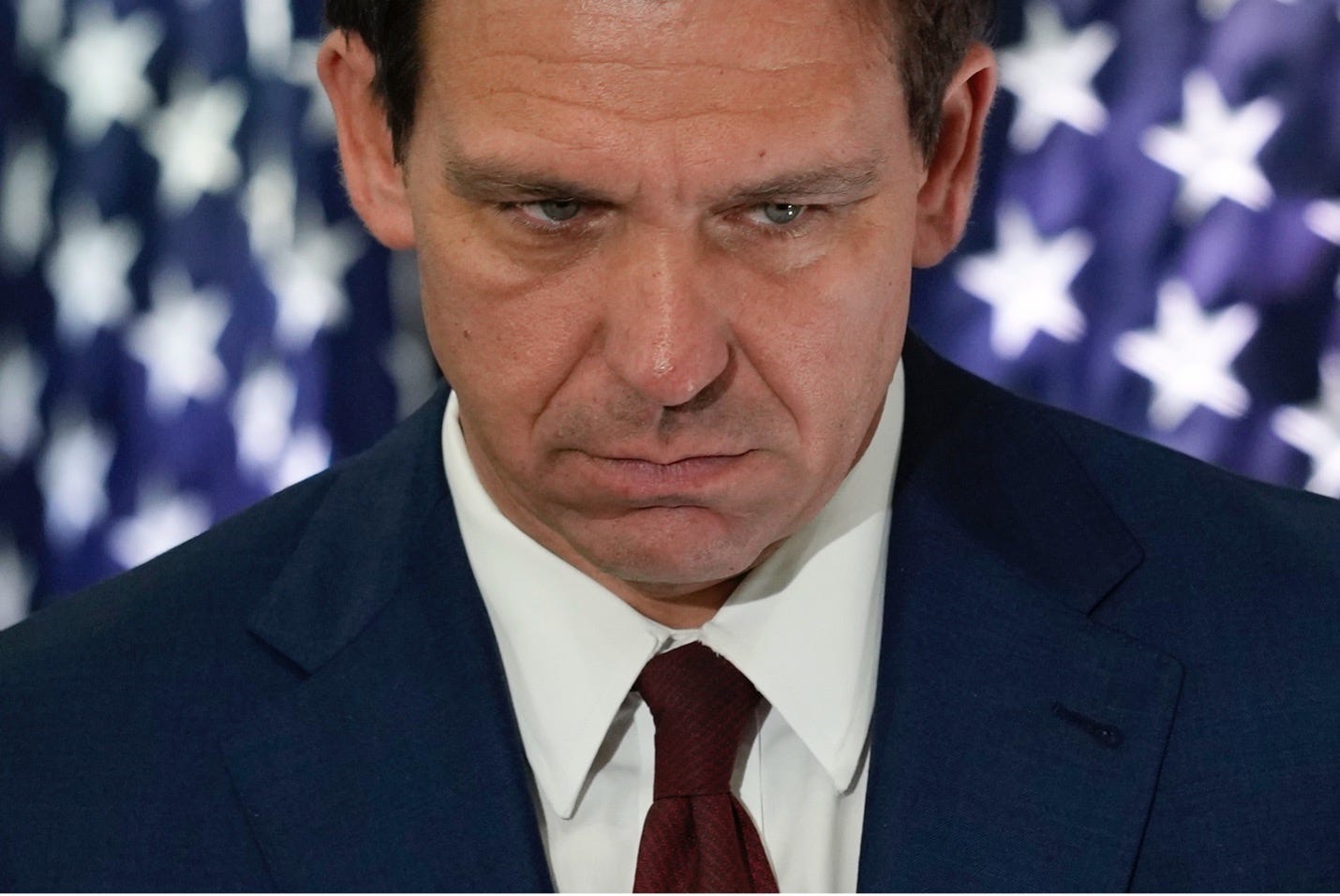
Lame duck Gov. Ron DeSantis has called the Florida Legislature back into special session to approve his property tax-cut scheme that could go before voters in November.
While everyone loves the idea of lower taxes, the question haunting the proposal is obvious: At what cost?
What services—schools, police, firefighting—would be jeopardized? Wouldn’t this result in a power shift away from cities and counties to the state? How do we feel about that?
And while Florida’s increasing cost of living is the hot-button issue right now, is this the most thoughtful way to address it?
Democrats—who are utterly outnumbered in the Legislature—argue that, ultimately, DeSantis’ plan would make the state even more unaffordable.
Others argue that this scheme—way too short on details of how essential services would be funded—is part of an ongoing project moving power away from communities to Tallahassee.
Here are summaries of several articles that flesh out these concerns with links to the full reports courtesy of the Florida Phoenix, the Florida Trident, and the Miami Herald:
Local government advocate says property tax proposal would make Florida ‘more unaffordable’
City and county governments would face major reductions in revenues for essential services if Gov. Ron DeSantis’ plan to substantially cut homeowners’ property taxes is approved by lawmakers and then 60% of the public as a constitutional amendment later this year.
Advocates for local governments in Florida held emergency “webinars” Monday morning ahead of this week’s special session on the topic to provide as much information as possible to their members on a plan unveiled five days ago, and which the Legislature is expected to approve (or reject) by Wednesday.
Under a proposed joint resolution filed in the Senate last week, homeowners who are permanent Florida residents by the end of 2026 would be eligible to receive a $150,000 homestead exemption in 2027 and a $250,000 exemption beginning in 2028.
The $250,000 exemption alone would cost counties an average $4.8 billion annually, or $8.65 billion with full elimination of homestead taxes by fiscal year 2030-31, according to the Florida Policy Institute. The Florida Association of Counties (FAC) said it would cost counties $4.6 billion by fiscal year 2028-29.
“We know this is a tax shift,” said Jeff Scala, deputy director with FAC in a webinar with members. “They’re framing this as a tax cut, but there are small businesses, all businesses, they’re going to feel the pain. Renters — they’re not going to get an exemption. This proposal makes Florida more unaffordable.”
Read the full report by Florida Phoenix reporter Mitch Perry here:
Everyone is talking about property taxes. Almost nobody is talking about power.
That’s strange because power, not taxes, is what this debate is really about. The sales pitch is simple: property taxes are unpopular, homeowners are angry, government has grown, and cutting tax bills will provide relief. Who doesn’t like that? But there is a difference between cutting taxes and changing who controls government. Florida is not debating a tax cut. Florida is debating a fundamental redesign of how local government is financed.
For more than half a century, Florida has embraced home rule. The idea was simple: Local communities should make local decisions. If a city council spends too much, voters can replace it. If a county commission raises taxes, voters can replace it. The people making spending decisions are accountable to the people paying the bills. That system is imperfect, but it is transparent. If your local government fails, you know exactly where to direct your frustration and exactly who to vote against.
Now imagine a different system. Imagine counties and cities that can no longer fund themselves. Imagine local officials traveling to Tallahassee not to seek a grant for a new project, but to keep deputies on patrol, firefighters in stations, and ambulances on the road. At that point, who is really running local government? The answer is not the county commission. The answer is not the city council.
The answer is whoever controls the money.
Read the complete commentary by Jeff Brandes, writing for the Florida Trident, here:
DeSantis property tax cut plan faces many questions
The Editorial Board of the Miami Herald also has questions about DeSantis’ plan. Here’s a quick summary:
His scheme was hastily prepared and lacks any public study of how it would impact schools, counties and cities.
Such a study was earlier proposed by the Legislature and DeSantis vetoed it.
As designed, DeSantis’ plan would be a boon to billionaires, capping the property tax exposure for the likes of Miami’s Mark Zuckerberg and his $170 million mansion.
Public schools would lose millions of dollars of revenue. The same for counties with cuts that would be “catastrophic” for parks, libraries, fire rescue and public hospitals.
To read the complete editorial, click the link below (although it may require a paid subscription):
A final thought:
Property tax reduction sounds great, but, as the saying goes, the devil is in the details. During the Legislature’s regular session, this idea went nowhere. Now it is being rushed during a brief special session—after the state budget has already been passed.
It appears ill-considered, primed for unintended consequences we may regret.
The only real winner appears to be DeSantis, who can claim he lowered taxes while someone else will be stuck with figuring out how to make the scheme work when he’s gone in six months.
This feels like a train wreck in the making. It hasn’t received the study it deserves, and the concerns of local communities should be seriously considered.
Just because this is something DeSantis wants doesn’t mean the Legislature has to give it to him. And it shouldn’t.
Florida Phoenix is part of States Newsroom, the nation’s largest state-focused nonprofit news organization. This story is republished with their permission. To support Florida Phoenix, click here:
The Florida Trident is a publication of the Florida Center for Government Accountability. To support the Trident and the Center’s work, you can subscribe and donate here:
Thanks for your support
It’s easy to feel overwhelmed if you are a rational person living in the Free State of Florida, but there are plenty of smart, reasonable people just like you here. The purpose of this newsletter and the Tropic Press website is to provide a source of news and commentary that shines a light through this irrational fog.
Thank you for your support as a subscriber. It is invaluable. This is especially so for those of you who have chosen to upgrade to paid subscriptions. Your contributions are making this possible.
J.C. Bruce
Share Tropic Press!
As this newsletter was written, Tropic Press was reaching more than 700,000 subscribers in Florida and elsewhere. But there are literally millions of Florida Democrats and independents we are not reaching yet.
That’s a problem you can help solve.
With mid-term elections on the horizon, the more people we reach, the more effective we can be in helping turn our state and this country around. You can play a vital role in that effort by sharing this newsletter with friends.
If you are reading this as an email, simply forward it. Or you can use the link below. Thanks.


