
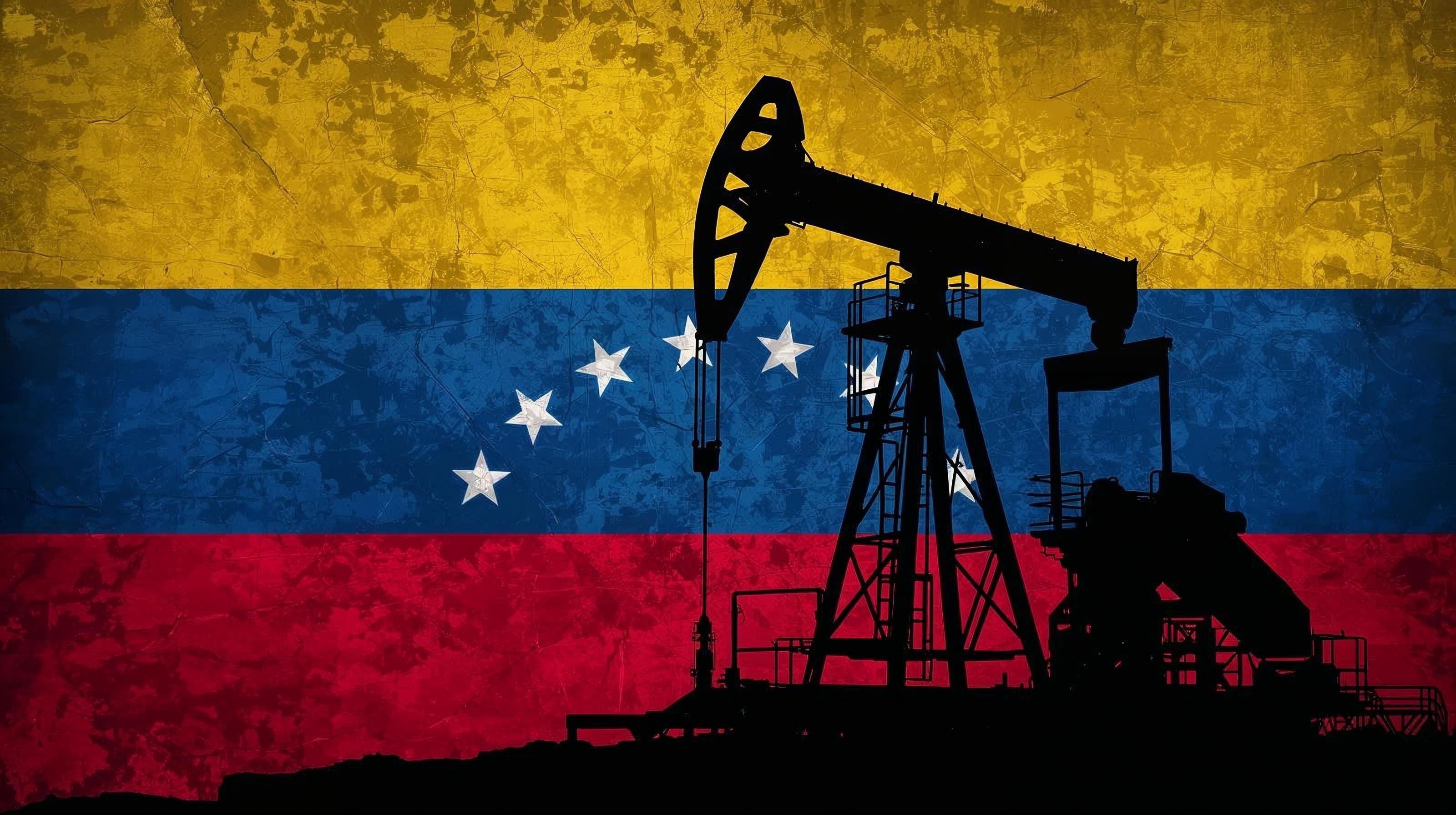
GUEST COMMENTARY: Venezuela and the paradox of our oil
The Trump administration is continuing to double down on its relentless attack on any attempt to take part in the ongoing energy transition away from fossil fuels.
By Bob Brecha
Special to Tropic Press
We are in a very perilous and fluid world geopolitical moment in which a number of grave threats are confronting global society.
These include the ongoing Russian war of aggression in Ukraine, the continuing crimes against humanity in Gaza, civil war in Sudan, and the accelerating climate crisis.
As is often the case on the world stage, many of the polycrises are actually related to one another.
For example, strife in the Horn of Africa leads to increasing flows of migrants, mostly within Africa, but also to Europe. Some, but not all, of the conflicts in Africa also arise from climate-induced emergencies such as crop-destroying droughts.
When Russia invaded Ukraine in 2022 for the second time, there were profound effects on global energy prices due to interrupted supplies of oil and natural gas, helping trigger inflation in many countries.
Then, high energy prices and increasing immigration in Europe and elsewhere have both contributed to the rise of far-right authoritarian parties, which in turn lends legitimacy to those authoritarians already in power, such as Viktor Orbán, Vladimir Putin, Xi Jinping, and many others.
Donald Trump and his enablers entered onto this world stage a year ago and proceeded to pour oil on the flames of a growing conflagration.
The main point of this essay is to highlight a couple of the many contradictions that are arising out of the latest illegal actions by the Trump administration, that is, the invasion of Venezuela, a sovereign country, and kidnapping of its (controversial, dictatorial, likely illegitimate) leader, Nicolás Maduro.
There have been many analyses of the stated pretenses used prior to, during and after the attack on Venezuela. Venezuela does not produce cocaine or the precursors to fentanyl, and as a transit country the cocaine leaving its shores is headed to Europe (toward which Trump otherwise shows no sympathy).
Blowing people up in international waters violates many different laws, the pardoning of the ex-president of Honduras, convicted under very similar charges, assembled under the first Trump administration, as those presented against Maduro, is inconsistent at best, and finally, there seems to be only disdain on the part of the administration toward the idea of working with the widely recognized winners of the last Venezuelan election, or the Nobel Peace Prize winning, most popular politician in the country, María Corina Machado.
Astonishingly quickly after the U.S. coup d’état in Venezuela, Trump announced a number of measures that made it clear to all that the goal of the invasion was to secure Venezuela’s oil resources.
Leaving aside the absurd claim by Trump that the oil under the ground in Venezuela belongs to the United States, we need to look more carefully at the background to this natural resource seizure and what it might or might not mean for global stability, U.S. energy security, and climate change.
One important point to note is that global oil markets essentially did not react at all to the events of January 3. That is astonishing given how jittery energy markets usually are in the face of attacks on fossil-fuel exporting countries. Recall the spikes in prices in early 2022 – even localized events ripple through the global economy because oil (and increasingly, natural gas) prices are set on an integrated global market.
Why were things different this time? The clear answer is that the global oil market is currently well-supplied – eliminating the million or so barrels a day of Venezuelan oil does not really matter.
Following this chain of reasoning, why might there be a glut of oil (with prices around $50-$60/barrel)? First, consumption of oil in wealthy countries (the OECD, or Organization for Economic Cooperation and Development) has been falling for the past two decades. Consumption is increasing elsewhere, primarily in China, but here another trend is going to be increasingly important – sales of electric vehicles in China are rising rapidly, more than 40 percent of total sales in 2024. Globally, over 20 percent of vehicle sales are electric, up from less than 5 percent just a few years ago.
As this trend continues, there cannot help but be a dampening of demand for gasoline and diesel fuel, and therefore for oil. Added to this is the trend that global light-duty vehicle sales of all types were higher ten years ago than they are now. That is, fewer vehicles being sold + more of these being electric = decreased future demand for oil.
There are two other key points about Venezuela’s oil resources and production that need to be mentioned. Many commentators have noted that precisely because the oil-sector infrastructure in Venezuela has been so poorly maintained, it will take tens of billions of dollars of investment to modernize the industry. In the face of potentially falling or stagnant demand for oil, and the uncertainty of future developments in the country, any U.S. company taking the leap into Venezuela (again, for some of them) is running a great financial risk
This is especially true since Econ 101 tells us that any increase in the supply of oil, with stagnant demand, will result in lower world market prices for oil. The lower price of oil would then make it harder for both US and Venezuelan producers to be profitable (to the extent that these will not be the same companies).
One of the commonly stated facts about Venezuela is that the country is home to the world’s largest proven reserves of oil. This statement should be treated with caution. “Proven reserves” are those that can be profitably extracted given the prevailing market price of oil. In Venezuela, stated reserves suddenly jumped from 80 million to 300 million barrels between 2005 and 2010, not because of a tremendous boom in exploration activity, but because the global oil price at the time was rising significantly, to well over $100 per barrel from a previous level closer to that of today.
Venezuelan oil is much “heavier,” i.e. of lower quality, than many other types, and harder to refine (although the US does have the necessary refineries), and therefore it is more difficult to extract it profitably. That is, in principle, the “proven reserves” should probably be scaled back to a fraction of the uncritically stated higher value.
To sum up, the Trump administration has invaded another country under seemingly false pretenses, opening the door for other authoritarians to justify doing the same.
The real reason for the invasion, quickly revealed as being a seizure of natural resources, does not seem to part be of a logical plan for the future, either for Venezuela or for the United States.
In fact, the touted coercion of private U.S. oil companies to invest tens of billions of dollars into a highly risky venture, would only make it harder for these companies to make a profit.
Left out of all of this is any concept for how oil in the ground in Venezuela will conceivably be used to actually benefit the people of the country.
Finally, the Trump administration is continuing to double down on its relentless attack on any attempt to take part in the ongoing energy transition away from fossil fuels, desperately needed to mitigate the worst impacts of climate change. We are witnessing not only the end of any semblance of a rules-based world order, so painstakingly (and imperfectly) built after two 20th century world wars, but also a deliberate sabotaging of an inhabitable planet for future generations.
Bob Brecha is a retired professor of sustainability, renewable energy and physics (University of Dayton), and long-term newspaper junkie (print and electronic). He consults on energy systems and climate change policies, based in Berlin, Germany. When not fretting about the state of the world and the global climate emergency, he enjoys hiking, biking and reading as much as possible.


