

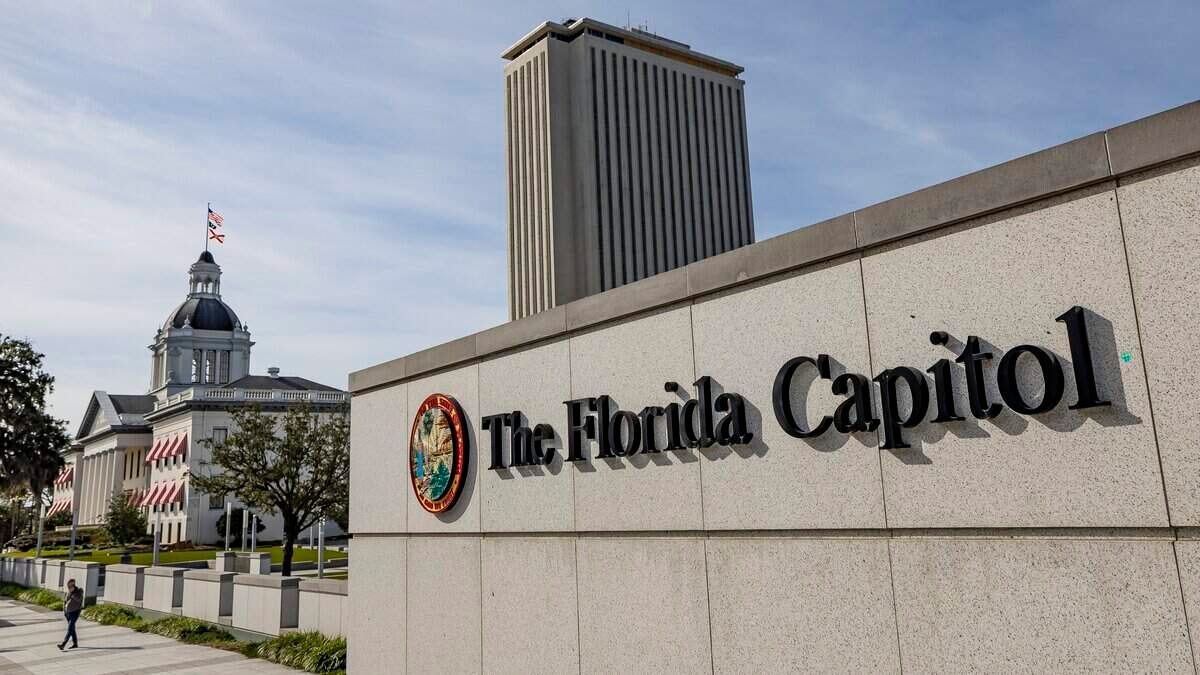
One of the biggest challenges facing the state is implementing the provisions of Amendment 3, which voters just approved in the midterm election. It will raise the homestead exemption for property owners to the point where all Florida counties—especially those in rural areas—will face drastic revenue cuts. Closing the gap to prevent devastating losses to police, fire and other essential services will be a huge headache. Independent journalist Jason Garcia lays out the issue facing legislators in this special report from his Seeking Rents column.
By Jason Garcia
The most important moment of last week’s “organizational session” — the one-day gathering in Tallahassee where freshman members of the Florida Legislature were sworn into office and new legislative leaders formally assumed control of their chambers — came about halfway through House Speaker Sam Garrison’s first speech from the chair.
Garrison, a Republican from Fleming Island, used his speech to warn members about some of the significant challenges ahead — particularly the fallout from Amendment 3, the voter-approved constitutional amendment that will, over the next two years, supersize the state’s homestead exemption from $50,000 to $250,000.
It’s a tax break that will save homeowners something like $2,000 a year on the property taxes they pay on their primary homes. But it will also rip a hole in the finances of cities, counties and towns across the state, for whom property taxes are the principal source of revenue. And it will fall to Florida’s Republican-controlled Legislature to backfill at least some of those local budget deficits in order to prevent harmful cuts to fundamental services like police, fire and public works.
“It is our responsibility to ensure that we do not replace one broken system of local taxation with another,” Garrison told his members. “And that we deliver on the promise to support critical local services in our entire state.”
Garrison intentionally emphasized that last bit — “our entire state” — and it drew a loud round of applause from House members, including a standing ovation from some Democrats in the back rows.
The new speaker of the state House was, in effect, laying down an early marker on what will be one of the defining issues of the Florida Legislature’s 2027 session: Deciding which communities across Florida get a financial lifeline from Tallahassee after Amendment 3 — and which will be left to fend for themselves in a new era of rugged austerity.
There already seems to be consensus among state leaders to help the state’s economically downtrodden rural counties — places where exempting the first $250,000 of taxable value on a home will have the effect of removing almost all homes from the municipal tax base.
“We will also need to consider how to address impacts to local communities that might not be able to completely absorb the loss in revenue, particularly rural areas of our state,” the new Senate president, Jim Boyd, a Bradenton Republican, said in his own introductory speech last week.
But that’s a relatively painless promise for politicians in Tallahassee, whose sales tax-funded budget has more than $50 billion in general revenue. They would have to find around $200 million a year to plug the Amendment 3 hole in Florida’s 29 “fiscally constrained” counties, according to estimates from state economists.
But there are lots of other places facing enormous fiscal challenges from Amendment 3. And they will be far more expensive to support.
Take Clay County, the county that elected Sam Garrison to the state Legislature.
A suburban county just outside of Jacksonville, Clay County is in a truly sour spot right now. It’s far too big and affluent to be considered fiscally constrained. But it’s also a bedroom community whose tax base skews heavily toward homestead property.
Clay County stands to lose roughly 38 percent of its total annual property tax collections once the homestead exemption reaches $250,000 in 2028, according to an analysis by the Florida Association of Counties. That’s one of the biggest hits in the state — bigger, even, than what many fiscally constrained counties are facing.
But the Florida Legislature would have to come up with another $80 million to make Clay County whole.

But if you’re going to help Clay County, what about Marion County in central Florida?
Marion — the heart of Florida horse country, midway between Orlando and Gainesville — stands to lose 39 percent of its property tax collections by fiscal 2028. And the dollar impact is even bigger: $170 million a year.
Or how about St. Lucie County on the southeast coast, which will quickly lose an estimated 35 percent of its property tax collections — roughly $280 million a year?
And then there are Florida’s big cities, the metro areas that already subsidize the rest of the state.
The immediate impacts of Amendment 3 aren’t as severe, at least in percentage terms, in places like Orlando, Tampa and Fort Lauderdale, which have lots of commercial activity.
But the cities face gigantic future shortfalls in dollar terms, particularly as the second big tax break in Amendment 3 — a property tax cap for commercial property and non-homestead homes — begins to ratchet up.
Residents of those cities should not be forced to swallow brutal service cuts while smaller communities are supported by the state — particularly given that voters in Orange County (Orlando), Hillsborough County (Tampa) and Broward County (Fort Lauderdale) all rejected Amendment 3.
Bailing out the fiscally constrained counties — all but one of which voted for Amendment 3, by the way — is easy. Finding equitable ways to soften the blow in the rest of Florida is much harder.
But that’s something the Florida Legislature — which, remember, rushed Amendment 3 onto the ballot without any substantive analysis of its impacts — absolutely must do.
Sam Garrison, at least, seems to get that.

This report by Jason Garcia is republished from Seeking Rents, his newsletter and podcast devoted to independent journalism about Florida politics, with an emphasis on how big businesses and other special interests influence public policy in the state.
Tropic Press, in addition to original reporting and commentary, is pleased to share outstanding Florida journalism such as this.
Seeking Rents is free, but you can support Jason’s work by becoming a paid subscriber and/or by making a one-time donation. The name, Seeking Rents, comes from a term meaning the act or process of exploiting the political process or manipulating the economic environment to increase one’s revenue or profits.
To subscribe to Jason Garcia’s work, click here:
A little help, please …
Beyond subscribing, one of the most helpful things you can do as a member of the Tropic Press community is to share this work with others. You can do that by hitting the SHARE button below (or simply forwarding this email) and also by hitting the RESTACK icon at the bottom of the post. It’s a lot smaller, but it looks like this:

Reposting sends these newsletters to other readers on the Substack network. And the more people we reach, the more effective we can be at changing the trajectory of our state and nation.
