

By J.C. Bruce
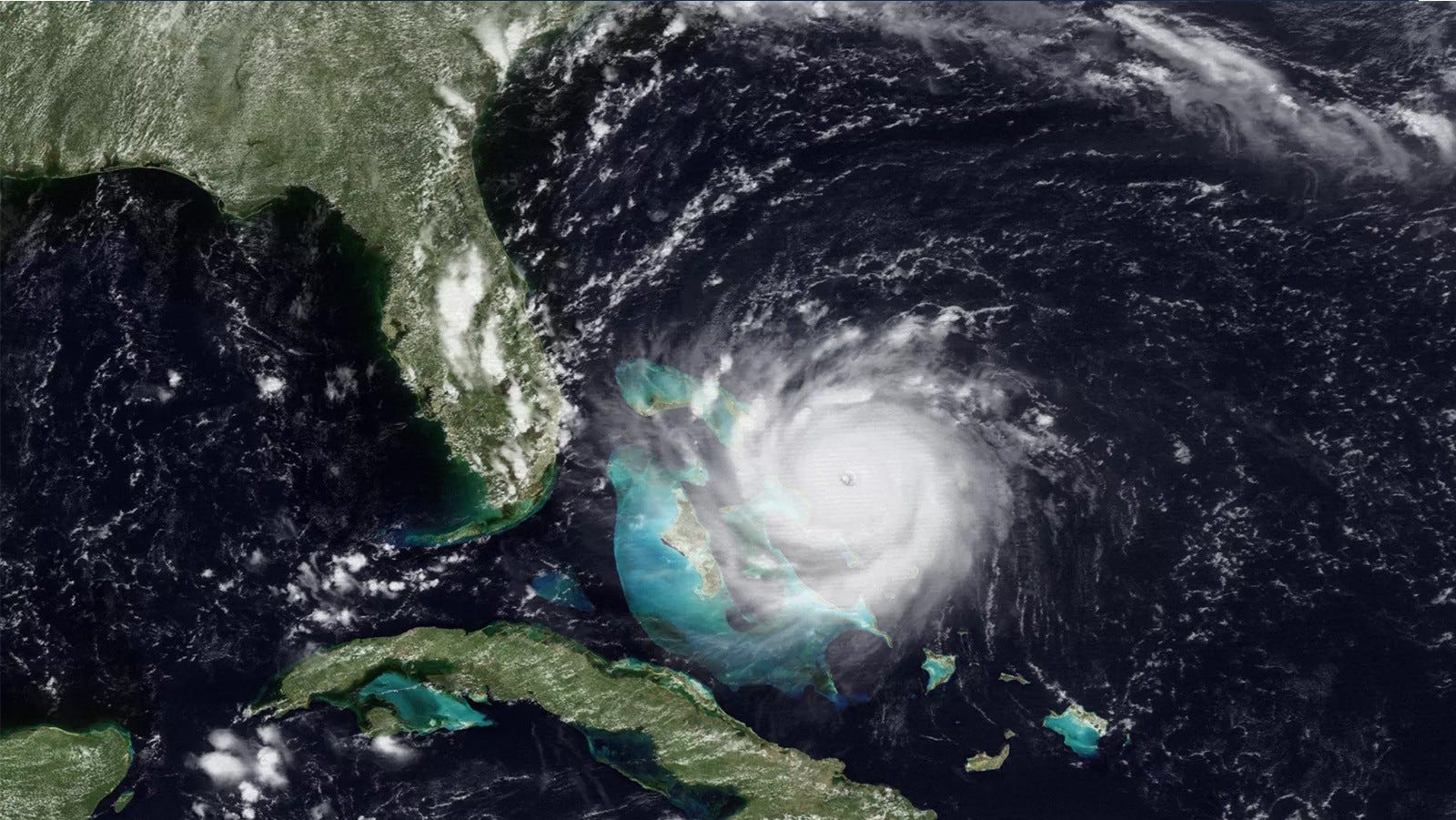
Weather experts are predicting that the 2026 hurricane season, which starts today, should have fewer storms than usual because of a Super El Niño.
Which, naturally, raises the question: What the heck is an El Niño, let alone a super one?
Which we will get to shortly, but first this word of caution:
No matter how many hurricanes we experience this year, even if below average, it only takes one Cat. 5 blowing through your neighborhood to ruin your day. So, the need for hurricane preparedness remains.
This is especially true for communities on the Gulf of Mexico, because even in a down year, hurricanes that spin up in the Gulf are often less affected by El Niño and they don’t give as much warning as those storms later in the year lumbering across the Atlantic from Africa.
(For any Republicans out there, this caution also applies to the Gulf of America, wherever that is.)
Now, to El Niño.
As I recently wrote in my Florida Weekly column, El Niño, translated from the Spanish, literally means: The Child.
As in the Christ Child.
It is a weather pattern first noticed by fishermen in the 1600s when the waters off the coast of Peru sometimes were unusually warm in December, around Christmastime.
They called the phenomenon El Niño de Navidad, the Christ Child, which later got shortened to simply El Niño.
Why the fishermen thought warm water had anything to do with the arrival of Santa Claus is a mystery, but, hey, they didn’t have the best weather satellites in the 1600s, and they likely didn’t know that the Earth was tilted on its axis by 23 degrees, which causes our seasons.
Over time, though, actual climate scientists — the people who study climate change, which, for the record, is real—noticed that this warming of the Pacific waters sometimes becomes more severe, and that it can disrupt normal weather patterns, so they kept using El Niño to describe it.
The upshot for us is that we are not only about to enter yet another El Niño weather cycle, but it will also be – hold on to your umbrella – a SUPER El Niño with ocean temperatures soaring more than 5 degrees above average.
This will result in extreme weather events around the globe, but for us, there may be fewer hurricanes in the Atlantic basin this year.
This is because the warmer water causes a shift in atmospheric circulation patterns making it more challenging for tropical storms to form.
It’s very technical, involving Kelvin Waves making their way across the Pacific, wind shear, and other factors far too complicated for the average reader to understand, so I won’t go into those details because that would require me to understand them first, and that ain’t gonna happen.
The first tropical storm of the year will be named Arthur, and the list of names goes on to Wilfred. I checked, and there is no Hurricane Donald or Tropical Storm Trump on the schedule, which seems like an oversight since our Narcissist-in-Chief seems intent on naming everything else after himself.
But, again, don’t let this sliver of good news keep you from being ready just in case an unwelcome tropical storm by whatever name shows up. While below average, the hurricane forecasters at Colorado State University say we can expect 13 named storms with six becoming hurricanes and two of those being major hurricanes.
So, preparedness is all.
Which is why at my house we’re already stocking up on bottled water and batteries.
However, I’m holding off on buying gasoline for my portable generator because, frankly, I can barely afford gas for my car right now.
Most costly and deadliest hurricanes
The most destructive hurricanes in U.S. history are typically ranked either by total financial damages (adjusted for inflation) or overall loss of life.
The following are the top five most destructive U.S. hurricanes by cost:
Hurricane Katrina (2005): $210 billion. Devastating the Gulf Coast and causing the catastrophic failure of the New Orleans levee system, it remains the costliest and one of the deadliest storms in U.S. history.
Hurricane Harvey (2017): $160 billion. Caused unprecedented, catastrophic flooding across southeastern Texas and the Houston metropolitan area.
Hurricane Ian (2022): $119.6 billion. Struck southwestern Florida as a powerful Category 4 hurricane, bringing catastrophic storm surge and widespread structural damage.
Hurricane Maria (2017): $115.2 billion. Devastated Puerto Rico and the U.S. Virgin Islands, causing an island-wide power grid collapse.
Hurricane Sandy (2012): $88.5 billion. Caused widespread destruction across the Mid-Atlantic and Northeastern United States.
When ranked by fatalities, the deadliest storms in U.S. history are significantly older because of improvements in our ability to track storms:
The Great Galveston Hurricane (1900): Estimated 8,000 to 12,000 deaths. A Category 4 storm that completely leveled the city of Galveston, Texas.
Lake Okeechobee Hurricane (1928): Approximately 2,500 deaths. Triggered a massive storm surge that breached the lake’s levees in Florida.
Hurricane Maria (2017): Estimated 2,982 deaths.
Hurricane Katrina (2005): Approximately 1,833 deaths.
Cheniere Caminanda (1893): Estimated 1,100 to 1,400 deaths. A powerful Louisiana hurricane that wiped out entire coastal communities
2026 Atlantic Hurricane Names
Arthur
Bertha
Cristobal
Dolly
Edouard
Fay
Gonzalo
Hanna
Isaias
Josephine
Kyle
Leah
Marco
Nana
Omar
Paulette
Rene
Sally
Teddy
Vicky
Wilfred

Thanks for your support
It’s easy to feel overwhelmed if you are a rational person living in the Free State of Florida, but there are plenty of smart, reasonable people just like you here. The purpose of this newsletter and the Tropic Press website is to provide a source of news and commentary that shines a light through this irrational fog.
Thank you for your support as a subscriber. It is invaluable. This is especially so for those of you who have chosen to upgrade to paid subscriptions. Your contributions are making this possible.
J.C. Bruce

Share Tropic Press!
As this newsletter was written, Tropic Press was reaching more than 700,000 subscribers in Florida and elsewhere. But there are literally millions of Florida Democrats and independents we are not reaching yet.
That’s a problem you can help solve.
With mid-term elections on the horizon, the more people we reach, the more effective we can be in helping turn our state and this country around. You can play a vital role in that effort by sharing this newsletter with friends.
If you are reading this as an email, simply forward it. Or you can use the link below. Thanks.
Just a suggestion: instead of buying millions of tiny water bottles, try stocking up on gallon containers or even larger. Even if you're diligently putting those empty tiny bottles in your recycle bin, only about 8% of plastic is actually recycled. For my family, we bought several gallon water containers, save the empties, and fill them up if the forecast indicates a potential hurricane. Caveat: if you save gallon containers with water in them, they will eventually leak. Saving the empty containers eliminates that problem.
Thank you for the copious information. Who knew?
Love your column(s).
You've got a forever friend in me.
Give my best to Miss Mingo :-)